Hyundai Paint Recall: What Raleigh Drivers Need to Know About the White Paint Warranty Extension
QUICKANSWER: Hyundai extended its paint warranty on certain white vehicles from 3 years or 36,000 miles to 10 years with unlimited miles, counted from the original delivery date and valid for original and later owners. The program covers specific white and pearl white colors on the Elantra, Sonata, Santa Fe Sport, Santa Fe, Santa Fe Hybrid, Tucson, and Palisade, and it applies to peeling or bubbling of factory applied paint on metal panels. It is a warranty extension, not a safety recall. To find out whether your car qualifies, enter your VIN on Hyundai's white paint page or ask any Hyundai dealer to check it.
You walk out to the driveway on a sunny Saturday and spot something on the hood that was not there last month. A curled edge of white paint, about the size of a quarter, lifting away from the metal. You touch it, and a bigger flake comes loose. The car has never been in a wreck, and nobody keyed it. Then you notice a second patch near the roof edge.
For a lot of Hyundai owners in and around Raleigh, Cary, Apex, and Garner, this is exactly how the problem starts. Hyundai has acknowledged it by extending warranty coverage on certain white paint colors, and that extension is worth knowing about before you spend a dime or a weekend on the problem yourself. Here is what the program actually covers, how it gets used, and what to expect from the repaint itself.
Recall or Warranty Extension? Why the Difference Matters
People searching for this tend to type "Hyundai paint recall," and that is a reasonable way to look for it. Technically, though, what Hyundai issued is a warranty extension, sometimes referred to by its campaign code, Z05.
A Recall Deals With Safety
Safety recalls address defects affecting vehicle safety or road performance. Peeling paint alone generally does not make your Hyundai unsafe.
A Warranty Extension Deals With A Known Quality Problem
Hyundai extended paint coverage without issuing a safety recall. An empty recall search does not confirm ineligibility.
Where To Check
Hyundai offers a white paint eligibility page where owners enter their VIN. Check directly, since mailed notices may be missing.
Which Hyundai Models and White Paints Are Included
Coverage is limited to particular models, years, and paint colors. A white Hyundai that is not on this list is not part of the program, even if its paint is peeling.
Elantra
Model years 2015 through 2018 in Quartz White Pearl.
Sonata
Model years 2015 through 2019 in Quartz White Pearl.
Santa Fe Sport
Model years 2017 and 2018 in Frost White Pearl.
Santa Fe
The 2019 model year in Quartz White Pearl, plus the 2021 through 2023 Santa Fe Hybrid in Cream White.
Tucson
Model years 2017 through 2021 in Dazzling White or Cream White.
Palisade
Model years 2020 through 2023 in Hyper White.
Hyundai describes the covered condition as excessive peeling or bubbling of the primer and paint film on the metal body panels: hood, fenders, roof, doors, quarter panels, and the tailgate or trunk lid. If your vehicle is listed but the problem is on a plastic bumper cover, that is a different conversation, and Hyundai's service notice specifically addresses not repainting plastic body panels.
What the Extension Does Not Cover
Knowing the limits up front saves frustration at the service counter.
Collision-Related Paint
The extension covers factory paint only. Panels repainted after collisions, hail damage, or other bodywork are excluded from coverage.
Aftermarket Paint
Hyundai's dealer notice explicitly excludes aftermarket paint from the white paint warranty extension program.
Branded Titles
Vehicles previously declared total losses, sold for salvage, or carrying branded titles are excluded from the extension.
Other Colors And Models
The program excludes peeling paint on silver, black, red, and other nonwhite Hyundai vehicles, regardless of model year.
This is where a used car purchase in the Triangle gets tricky. Because the coverage transfers to later owners, a second or third owner can still use it, but only if the panels are original paint and the title is clean. If you are not sure whether a panel has ever been refinished, a shop can measure the paint film and look for signs of overspray, which often settles the question.
TIP: Before you visit the dealer, take clear photos of every peeling spot and one wide shot of each side of the car, in daylight. Hyundai's own repair procedure calls for documenting the entire vehicle, so having your own record from the start keeps the conversation specific.
Why White Paint Peels in the First Place
The pattern is consistent enough that body and paint technicians recognize it on sight. Large sheets of white base and clear coat lift away, and what shows underneath is not bare, rusty steel. It is a smooth, dark green, gray, or black layer, which is the electrocoat primer applied at the factory. In plain terms, the topcoats did not bond firmly to the layer beneath them.
It Starts On Flat, Sun Facing Panels
Hoods and roofs often peel first because they receive intense heat and ultraviolet exposure, especially during Raleigh's hot summers.
Washing Makes It Visible
Owners often notice peeling after washing or heavy rain, when water and sponges catch loose edges and pull away additional paint.
It Tends To Spread
Once one flat panel begins failing, others may follow. Repainting the entire panel usually lasts longer than patching areas where edges keep lifting.
What Happens When You Use the Warranty
Hyundai's process runs through a dealer, and the steps are fairly consistent.
Step One Is The Check
The dealer verifies your VIN eligibility and confirms the vehicle retains its original factory-applied paint before proceeding.
Step Two Is Documentation
Technicians inspect each panel, photographing the damaged areas and the entire vehicle to document the paint condition.
Step Three Is The Repaint
Dealers arrange repairs through body shops, preferably certified collision centers. Only affected panels are repainted unless blending requires neighboring panels.
Step Four Is Time
Paint repairs may take several days, depending on the shop. Hyundai recommends rental cars or alternative transportation during the repair period.
If Your Car Is Past The Extended Term
Dealers may request goodwill consideration before repairs begin. Approval is not guaranteed, but documented history and clear photographs may support your request.
Warning: Do not have an independent shop sand, prime, and repaint a peeling panel before you have talked to Hyundai. Once a panel has been refinished, it counts as aftermarket paint, and Hyundai states that aftermarket paint is not covered under the extension.
What a Proper White Repaint Involves
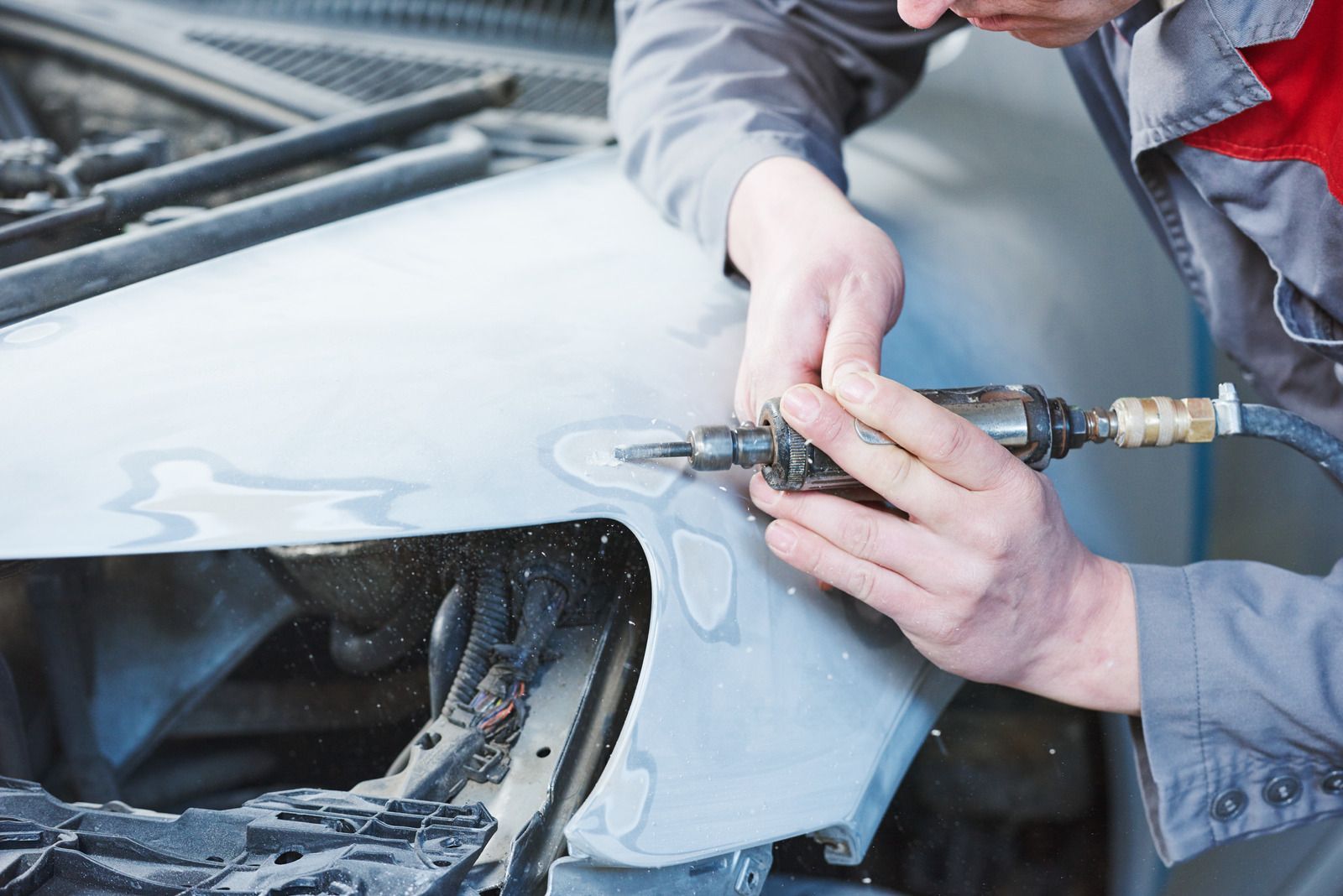
Whether the work happens under warranty or outside it, the quality of the repaint decides how long it lasts. White is less forgiving than most people assume, because it has poor hiding power and shows every inconsistency underneath it.
Remove Everything Unstable
Remove loose paint completely and sand edges smoothly. Painting over unstable edges allows peeling to return quickly.
Scuff The Electrocoat Properly
Factory primer needs a uniform matte finish before repainting. Glossy surfaces prevent proper adhesion and increase the risk of future peeling.
Use The Right Sealer Shade
White or light gray sealer creates an even foundation, helping white base coats cover consistently without visible shadows or patchy areas.
Match Pearl Colors With Care
Pearl finishes require test cards and careful blending. Rushed work can create noticeable color differences between hoods and adjacent panels.
Let It Cure
Follow proper drying times between coats to prevent trapped solvents and adhesion problems. Clean booths, suitable temperatures, and patience improve durability.
Follow The Aftercare
Wash fresh paint gently for several weeks, avoid adhesives, and keep pressure washer nozzles away from panel edges to protect the finish.
What Raleigh Owners Should Do This Week
If you drive one of the listed white Hyundais, a few simple steps put you in a good position.
Check The VIN
Use Hyundai's white paint eligibility page to check your VIN. The process takes only a few minutes.
Look Closely Before It Spreads
Inspect the hood, roof, and tailgate for bubbling, tiny blisters, or hazy edges before larger paint flakes appear.
Keep Documents
Save purchase paperwork, service records, and photos. If buying used, ask the seller about previous bodywork or repainting.
Wash Gently
Hand wash using a soft mitt, avoid automatic brushes, and keep pressure washers away from lifting paint until repairs are complete.
Do Not Ignore Bare Spots
Exposed metal can develop rust when moisture reaches it. North Carolina humidity, storms, and winter road treatments make prompt repairs especially important.
Frequently Asked Questions
Is the Hyundai white paint warranty extension the same as a safety recall?
No. It is a warranty extension for a paint quality problem, not a safety defect. Your car is safe to drive with peeling paint, but the finish and the metal underneath will suffer if ignored.
How long does the extended paint coverage last?
Hyundai extended coverage on eligible vehicles from 3 years or 36,000 miles to 10 years with unlimited miles. It is measured from the original delivery date or first use, and it applies to original and later owners.
Can I use the extension if I bought my Hyundai used?
Yes, the coverage transfers to later owners. The paint must still be the original factory finish, and the vehicle cannot carry a salvage title or any other branded title, or the claim will be denied.
What if my white Hyundai is not on the list but the paint is peeling?
The extension covers only the models, years, and colors Hyundai named. You can still ask the dealer about goodwill consideration, and a body shop can inspect the panel to determine whether the cause was factory adhesion or an earlier refinish.
Will the repaint cover the whole car?
Not necessarily. Hyundai’s procedure repaints the affected panels, plus neighboring areas only when needed for color matching and blending. Since the problem can spread, ask the dealer and paint shop to inspect every metal panel before starting.
Why not just touch up the peeling spot myself?
Touch up paint cannot bond to a failing surface, so the surrounding edges usually keep lifting. A DIY patch can also make it harder to prove the original paint failed. Photograph the damage and get it evaluated first.
A Clean Finish That Lasts Beyond the Warranty
A peeling white hood or roof is easy to dismiss as a cosmetic flaw, but it signals a finish that has stopped bonding to the metal. The Hyundai paint warranty extension gives eligible owners a real way to address it, provided the paint is still the original factory finish and the title is clean. Checking your VIN, photographing the damage, and keeping the panels untouched before the dealer visit all protect your claim and keep the repair on the right track.
Once the paperwork is sorted, the quality of the work matters just as much as the coverage. Piperformance
in Raleigh, NC brings 25
years of experience to matching pearl whites, prepping surfaces so new paint grips, and blending panels so the color holds up under full sunlight. Every repair carries a lifetime warranty, so the finish on your Hyundai stays smooth and consistent long after the repaint is done.