Does Collision Damage or Auto Body Repair Affect Your Car’s Resale Value?
A car accident can affect more than the way your vehicle looks. Even after professional repairs are completed, the fact that a vehicle has been involved in a collision may influence how future buyers, dealerships, and appraisal services determine its value.
For many Raleigh drivers, that raises an important question: Does collision damage permanently reduce a vehicle’s resale value?
The answer depends on several factors, including the severity of the accident, the quality of the repairs, the type of vehicle, the vehicle’s age and mileage, and whether the damage appears on a vehicle history report. A properly repaired vehicle can still retain substantial value, but poor-quality body work or unresolved damage can make a much bigger difference when it is time to sell or trade in the vehicle.
At Piperformance
in Raleigh, NC, we believe understanding these factors can help vehicle owners make better decisions after an accident.
Why Accident History Can Affect Vehicle Value
When someone shops for a used vehicle, accident history is often one of the first things they investigate.
Two vehicles may be the same year, make, model, trim level, and mileage, but buyers may be willing to pay more for the one that has never been involved in a reported collision.
That happens because buyers cannot always tell exactly how severe previous damage was or how well it was repaired.
A vehicle that has been professionally repaired may look and drive extremely well, but some buyers still view accident history as an additional unknown. Because of that perceived risk, the vehicle may receive a lower offer compared with an otherwise identical vehicle with a clean accident history.
This potential reduction in market value is sometimes referred to as diminished value.
What Is Diminished Value?
Diminished value generally refers to the difference between what a vehicle was worth before an accident and what it may be worth after the accident and subsequent repairs.
Even when repairs are completed properly, the vehicle’s history may still influence what someone is willing to pay for it.
There are several factors that can affect the amount of diminished value, including:
- Age of the vehicle
- Mileage
- Pre-accident condition
- Severity of the collision
- Type of damage
- Quality of repairs
- Vehicle make and model
- Market demand
- Whether structural components were damaged
- Whether the accident appears on a vehicle history report
A newer, low-mileage luxury vehicle may experience a different impact than an older vehicle with high mileage.
There is no single percentage that applies to every repaired vehicle.
Does Every Accident Reduce Resale Value?
Not necessarily to the same degree.
A small bumper repair is very different from a major collision involving structural damage.
If a relatively new vehicle receives minor cosmetic damage and is professionally repaired, the effect on resale value may be limited. On the other hand, a vehicle involved in a severe accident may be evaluated more cautiously by future buyers even after extensive repairs.
The type of damage matters because buyers often differentiate between minor cosmetic repairs and major structural work.
For example, a professionally repaired door ding or scraped bumper is generally viewed differently than a collision that affected multiple body panels and structural components.
The important thing is that any necessary repairs are performed correctly.
Trying to save money with poor-quality repairs can create much larger resale problems later.
Repair Quality Can Make a Major Difference
Although you cannot change the fact that an accident happened, you can control where you take your vehicle for repairs.
High-quality collision repair can make a significant difference in how the vehicle looks, functions, and presents itself when it is eventually sold or traded.
Potential buyers and dealerships may look closely for signs of previous body work.
Common signs of poor repairs can include:
- Uneven panel gaps
- Mismatched paint
- Overspray
- Visible sanding marks
- Poorly aligned bumpers
- Uneven doors, hood, or trunk
- Paint texture differences
- Loose trim
- Unusual noises
- Warning lights
- Improperly fitted replacement parts
A vehicle with obvious repair flaws can immediately raise concerns.
Professional workmanship helps minimize those concerns by making sure repaired areas are properly aligned, finished, and inspected.
At Piperformance, attention to detail is an important part of the collision repair process because the quality of the repair can matter long after the vehicle leaves the shop.
Paint Matching Matters More Than Many Drivers Realize
Paint quality is one of the easiest things for a potential buyer to notice.
Modern automotive paint systems can involve multiple layers, metallic finishes, pearl effects, and colors that change slightly depending on lighting conditions.
Simply finding a paint color with the same name is not always enough.
A quality body shop uses professional color-matching methods and refinishing techniques to help repaired panels blend with surrounding areas.
When paint matching is done poorly, a repaired fender, door, or bumper may stand out from the rest of the vehicle.
That difference can become especially obvious in sunlight.
Even if the underlying repair is structurally sound, visible color differences may make buyers question the overall quality of the work.
For that reason, refinishing plays an important role in both appearance and long-term vehicle value.
Structural Repairs Can Receive More Attention
Structural damage tends to receive greater scrutiny when a vehicle is sold.
Modern vehicles are engineered with specific structural components designed to manage crash forces and protect occupants. When those areas are damaged, the repair needs to follow appropriate procedures.
A vehicle that has undergone structural repairs is not automatically unsafe or undesirable.
What matters is whether the damage was properly identified and the repair was performed correctly.
Experienced collision technicians may use measuring systems and specialized equipment to evaluate alignment and make necessary corrections.
Future buyers may never see those repairs directly, but documentation showing that the work was completed by a reputable body shop can provide additional confidence.
Vehicle History Reports Can Affect Buyer Perception
Services that provide vehicle history reports may contain information about reported accidents, insurance claims, title history, ownership, and certain repairs.
Whether a particular accident appears on one of these reports can depend on where and how the information was reported.
If an accident appears on the vehicle history report, buyers may ask questions about what happened and how the vehicle was repaired.
This is where good documentation becomes useful.
Instead of simply telling a buyer that “the car was fixed,” you may be able to provide repair invoices or other information showing what work was performed.
Transparency can help potential buyers understand that the vehicle received professional attention rather than an unknown repair from an unknown source.
Should You Keep Your Collision Repair Documentation?
Yes.
Keeping documentation from the body shop is one of the easiest things you can do after a collision.
Consider keeping:
- Final repair invoice
- Itemized repair estimate
- Records of replacement parts
- Before-and-after photos
- Warranty information
- Insurance documentation
- Alignment or measurement records when applicable
- Calibration documentation when applicable
These records can help explain the scope and quality of the repair later.
They can also be useful if you experience an issue with the repaired area and need to reference the warranty.
At Piperformance, repairs are backed by a lifetime warranty, giving customers added confidence in the workmanship performed on their vehicles.
Does Using OEM vs. Aftermarket Parts Affect Resale Value?
Parts selection may influence buyer perception in certain situations, particularly on newer or higher-value vehicles.
OEM parts are designed by or for the original vehicle manufacturer, while aftermarket parts are produced by other companies.
Quality can vary among aftermarket components.
Some buyers place a premium on vehicles repaired with OEM replacement parts, while others may not ask about parts at all.
More importantly, any replacement part should fit correctly, function properly, and be appropriate for the repair.
A professional body shop can explain the parts being considered and why they are appropriate for the particular vehicle.
The quality of the completed repair matters more than simply seeing a particular word on an invoice.
Can Minor Dents and Scratches Hurt Resale Value?
Yes, even damage that never involved an accident can affect resale value.
When a buyer sees dents, scratches, chipped paint, or bumper damage, they may mentally subtract the expected repair cost from what they are willing to pay.
Dealerships often do something similar when evaluating a trade-in.
Small cosmetic issues may make a vehicle appear less well maintained, even when it runs perfectly.
Some scratches can also penetrate the protective paint layers and expose metal underneath, potentially allowing corrosion to develop.
Addressing minor body damage before selling or trading in a vehicle can sometimes improve its overall presentation and perceived condition.
However, whether the repair is financially worthwhile depends on the age, value, and condition of the vehicle.
Paintless Dent Repair May Help Preserve Original Paint
For certain types of dents, paintless dent repair may be an option.
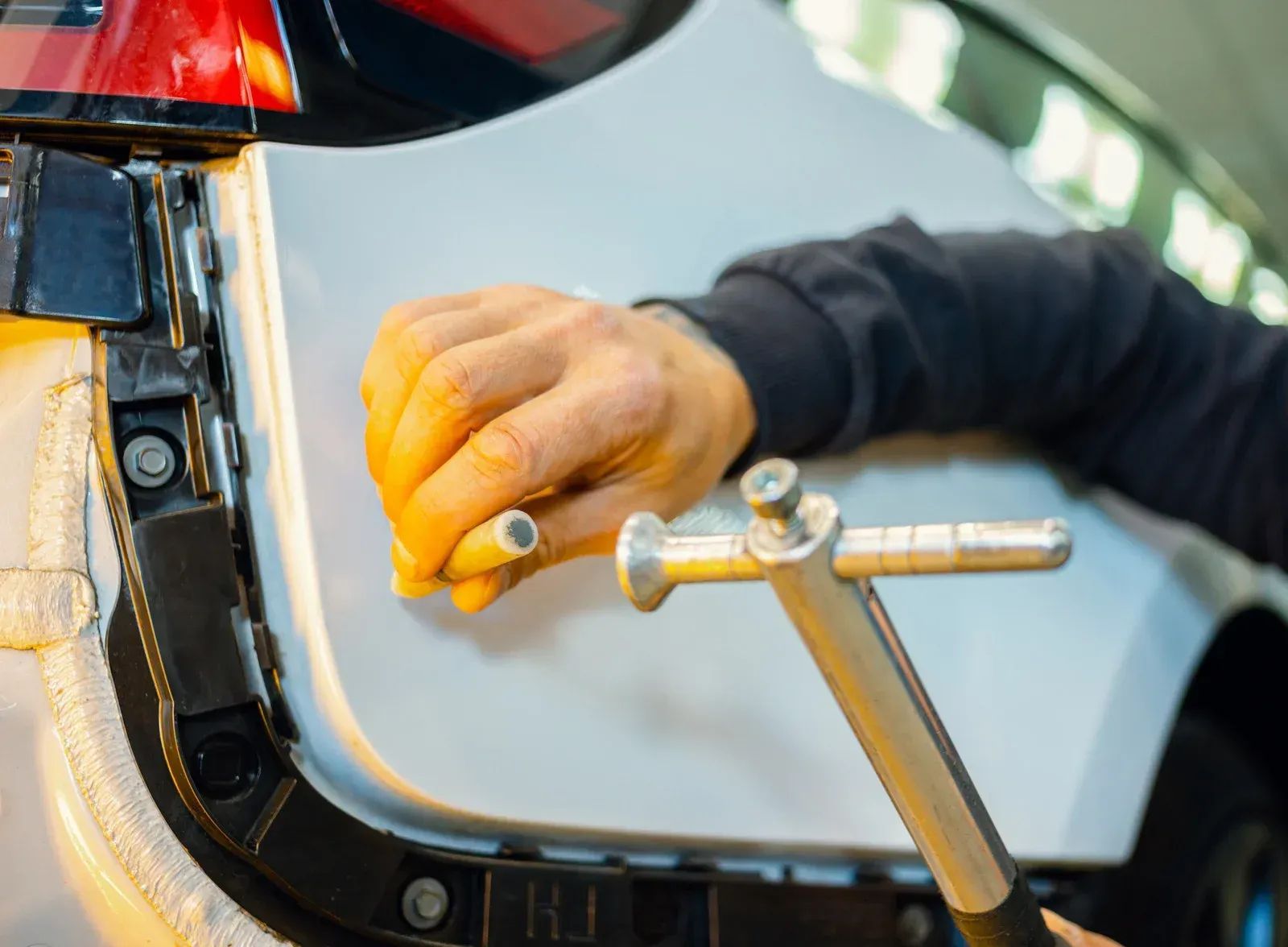
Paintless dent repair, commonly called PDR, works by carefully reshaping damaged metal without traditional body filler or repainting.
It is generally most appropriate when the paint has remained intact and the damage is accessible.
Because the original factory finish remains in place, PDR can be an appealing repair method for minor dents when the damage qualifies.
Not every dent can be repaired this way.
Sharp creases, stretched metal, cracked paint, or certain collision damage may require conventional body repair instead.
An experienced technician can determine which approach makes the most sense.
Should You Repair Body Damage Before Trading In Your Car?
It depends on the damage.
If your vehicle has obvious dents, scratches, cracked bumpers, broken lights, or damaged panels, a dealership may reduce its trade-in offer to account for the work they expect to perform.
Repairing visible damage first could improve the vehicle’s presentation, but you should compare the repair cost against the potential increase in trade-in value.
For a higher-value vehicle, professional body repairs may make more financial sense than they would for a vehicle approaching the end of its useful life.
If you are considering selling or trading in your vehicle, getting an estimate from a body shop can give you useful information before deciding what to do.
Can You Claim Diminished Value After an Accident?
In some situations, vehicle owners may explore a diminished value claim after an accident.
Rules and eligibility can vary depending on the circumstances, insurance policy, liability, state law, and the specifics of the claim.
A collision repair shop does not determine whether an insurance company owes diminished value.
If you believe your vehicle has lost market value because of an accident caused by another driver, you may want to discuss the situation directly with your insurance company or a qualified professional familiar with North Carolina claims.
The important distinction is that repair cost and diminished value are not necessarily the same thing.
Repair costs address the physical damage to the vehicle. Diminished value relates to the potential change in market value after the accident.
Avoid Cutting Corners Just to Keep the Initial Repair Cost Low
Choosing the cheapest repair option may seem attractive immediately after an accident, especially if you are paying part or all of the bill yourself.
However, low-quality repairs can create problems that become obvious later.
Poor paint work, panel alignment issues, improperly repaired damage, or incorrect replacement parts can all reduce buyer confidence.
A vehicle that looks professionally repaired is much easier to present to a future buyer than one with obvious evidence of rushed workmanship.
This is one reason it makes sense to evaluate a body shop based on more than price alone.
Experience, warranty coverage, communication, craftsmanship, and attention to detail all matter.
You Have the Right to Choose Your Collision Repair Shop
After an accident, an insurance company may recommend certain repair facilities.
That does not mean you should automatically choose the shop suggested to you.
Vehicle owners generally have the ability to select the collision repair facility they trust with their vehicle.
Consider factors such as:
- Experience
- Repair quality
- Customer reviews
- Communication
- Warranty coverage
- Shop cleanliness
- Repair procedures
- Customer service
- Willingness to explain the estimate
You are trusting the shop with one of your most valuable possessions.
Taking time to choose carefully can have an impact on the immediate repair experience as well as the vehicle's long-term condition and value.
Protecting the Value of Your Vehicle After an Accident
An accident may affect resale value, but the quality of the repair is something you can control.
Proper body alignment, high-quality refinishing, appropriate replacement parts, professional workmanship, and thorough documentation all help protect the vehicle after collision damage.
You may not be able to erase an accident from the vehicle's history, but you can make sure the repair itself does not create additional concerns.
That is why choosing the right body shop matters.
Trusted Auto Body Repair in Raleigh, NC
Piperformance has been serving Raleigh, NC since 2002, providing collision and auto body repairs with a focus on craftsmanship, transparency, and personal service. With decades of industry experience, our team understands that customers want more than a vehicle that simply looks better when it leaves the shop. They want confidence that the work was handled carefully and correctly.
Whether you are dealing with major collision damage, dents, scratches, bumper damage, paint issues, or structural repairs, we take the time to evaluate your vehicle and explain the repair process clearly.
We work with your insurance company, not for your insurance company, and keep the needs of the customer at the center of the repair.
If your vehicle has been damaged and you are concerned about its condition, appearance, or long-term value, contact Piperformance
in Raleigh, NC to schedule an estimate.