Paintless Dent Repair vs Traditional Dent Repair: What’s the Difference?
You walk back to your car in a crowded lot, outside Crabtree Valley Mall or a deck near North Hills, and there it is. A fresh dent in your door, right where the car beside you swung theirs open. Your stomach drops. The first question almost everyone asks is the same. Does this need a full repaint, or can someone just pop it back out? The honest answer comes down to one thing more than any other, and most people guess wrong about it. It is not the size of the dent. It is whether the paint is still intact.
After working dents like this for years, we can usually tell within seconds which way a repair goes just by running a hand across the panel and watching how light bends.
Paintless dent repair and traditional bodywork fix the same visual problem in completely different ways, and choosing wrong wastes your time. Here is what separates the two, when each is the right call, and how the weather and parking around Raleigh push more local cars toward one method over the other.
What Paintless Dent Repair Actually Is
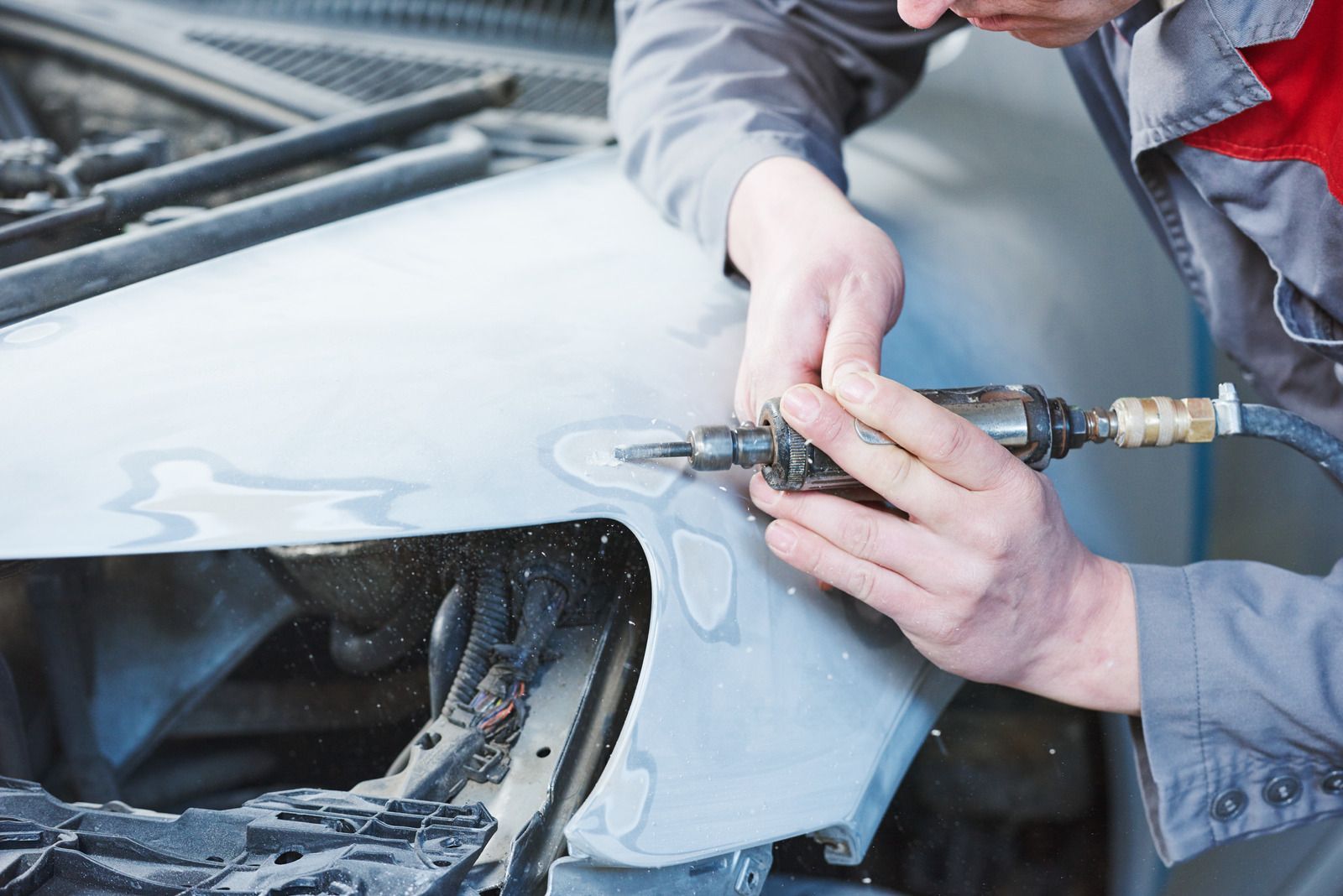
Paintless dent repair fixes a dent without sanding, filler, or any new paint. We work the metal back to its original shape from behind the panel, using long steel rods and fine picks to push each high and low spot into place a fraction of a millimeter at a time.
Two things have to be true for this to work. The paint and clear coat must be unbroken, and the metal cannot be stretched past its memory. Steel holds that memory well, which is why a clean door ding often pops out in under an hour with the factory finish untouched. Most door dings, minor hail dimples, and shallow creases up to a few inches across are strong candidates, as long as the paint never cracked.
How Traditional Dent Repair Works
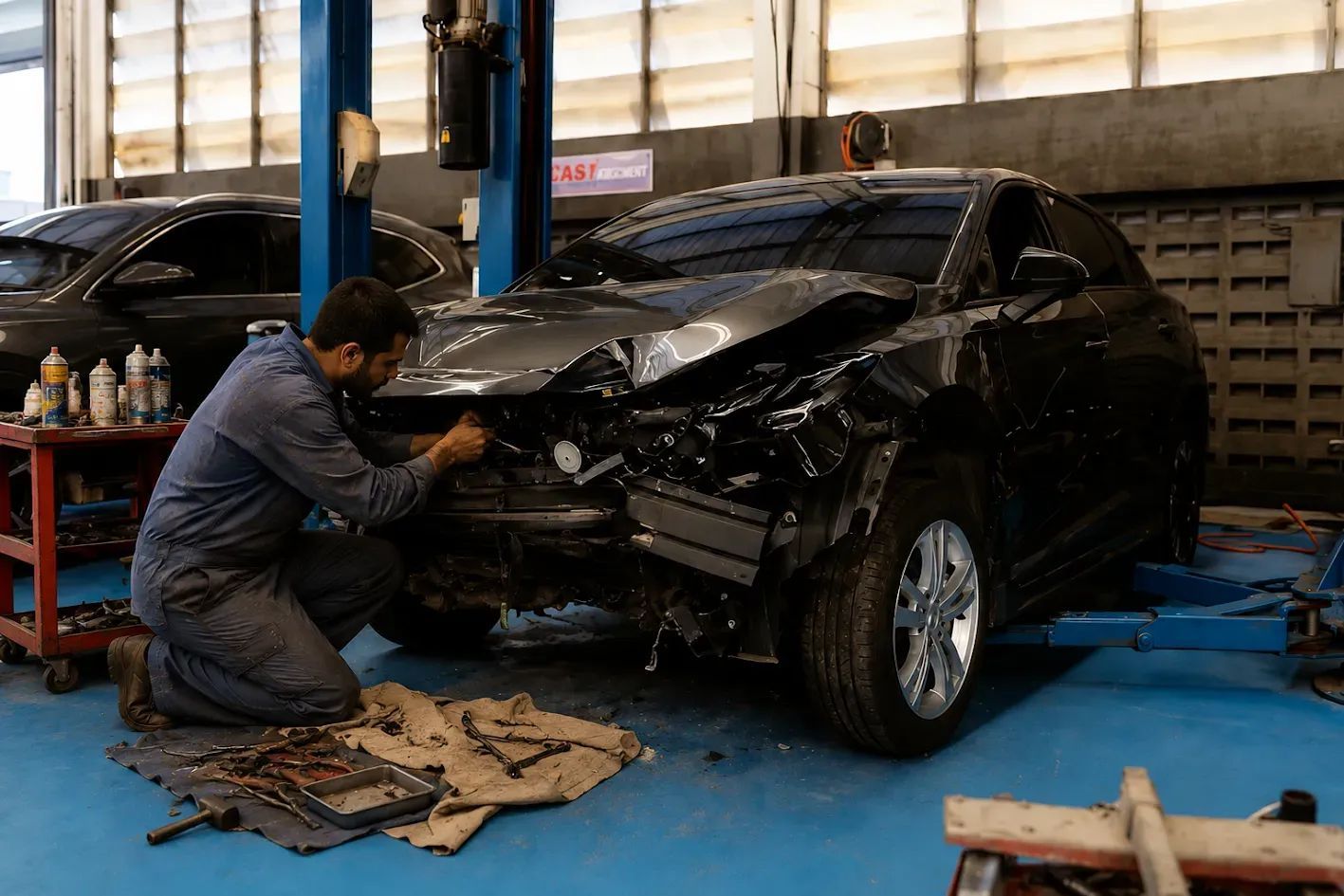
Traditional repair rebuilds the surface from the outside in, and it becomes the right choice the moment paint is broken or metal is torn. We pull or tap the dent close to shape, apply a thin layer of body filler over the low spots, and block sand it dead flat. After priming, the panel takes base coat and clear coat, and we blend the fresh paint into the surrounding panels so the repair disappears.
The blending is where the real skill lives. We use a computer match to find the closest base, then fine tune by eye under proper light. Sun faded clear coat on an older car, baked by years of hot Carolina summers, makes that match harder because the original color has drifted from its factory value. Traditional work usually takes a couple of days, since filler, primer, and paint each need time to cure.
The Real Difference In One Look
Strip away the noise and it comes down to whether your factory paint survives. Paintless repair reshapes what is already there and keeps the original finish. Traditional repair rebuilds what was lost once paint has chipped, cracked, or peeled.
| Factor | Paintless Dent Repair | Traditional Dent Repair |
|---|---|---|
| Paint condition | Must be intact and uncracked | Works even when paint is broken |
| Typical turnaround | Often same day, sometimes hours | Usually two or more days |
| Original finish | Fully preserved | Replaced and color matched |
| Best for | Door dings, hail dimples, shallow creases | Stretched metal, torn panels, chipped paint |
| Resale value | Keeps factory paint, strongest for resale | Solid when blended well, no longer factory |
When Paintless Repair Is The Right Call
Reach for paintless repair first whenever the paint over the damage is smooth and unbroken. Run a fingernail across the dent. If it glides over without catching on a chip or crack, the finish is likely intact and paintless is on the table.
The Triangle produces this exact damage by the thousand. Tight decks downtown, busy lots around North Hills and Cary, and grocery runs across Wake County leave door dings every week. Spring hail through central North Carolina drops dozens of shallow dimples across a hood or roof with the paint perfectly fine underneath. That pattern is almost made for paintless work.
When Traditional Repair Is The Only Option
Once the paint is compromised, paintless repair is off the table. Cracked or chipped paint, a sharp crease that stretched the metal, rust starting at the damage, or a panel folded in a collision all call for filler, primer, and fresh paint.
Edge damage is the other clear line. Dents sitting right on a body line, panel edge, or over a bracket give the rods nothing to push against, so even with intact paint those usually move to a conventional repair. Bigger impacts from a fender bender, a fallen limb after a summer storm, or backing into a post involve enough deformation that rebuilding the surface is the only way to get it straight and sealed.
How We Decide Which Method Your Car Needs
Every dent gets the same quick read, and you can run the first part yourself. Check the paint by sight and touch for any crack, chip, or flake. Read the panel under angled light to see how deep and how stretched the metal is. Then check the location, since a dent near an edge or over a brace changes everything.
On service calls we frequently find that a dent which looks dramatic is actually a clean paintless candidate, while a small but sharp crease that broke the clear coat needs full paint.
What Raleigh Weather And Roads Do To Your Paint
Local conditions decide how often each repair shows up in our bay. Raleigh summers run hot and humid for months, and that steady heat slowly bakes clear coat until the color drifts from its factory value. On a ten year old car, that drift is exactly why a repaint needs extra blending, and why protecting the original finish with paintless work matters more the older your car gets.
Spring brings the other big factor. Storms across Wake and the surrounding counties can dimple a roof or hood in minutes, almost always without breaking paint, which makes paintless repair the go to fix afterward. Tight Triangle parking, from downtown decks to mall lots, keeps door dings rolling in all year.
Frequently Asked Questions
Can paintless dent repair fix any dent on my car?
No. Paintless repair only works when the paint is unbroken and the metal is not stretched past its memory. Door dings, hail dimples, and shallow creases respond well, especially on steel panels. Sharp creases, chipped paint, edge damage, and collision dents usually need traditional filler and fresh paint instead. We always check the panel first, since the right method depends on what the metal shows.
Will paintless repair keep my factory paint and resale value?
Yes. Because we never sand or repaint, your original factory finish stays fully intact. That protects resale value and avoids any color mismatch, which is a real concern on older paint. It is one of the biggest reasons we recommend paintless repair first whenever the paint over a dent is still unbroken. Buyers and appraisers notice original paint, so keeping it intact often helps later.
How long does each type of dent repair take?
A clean paintless job often finishes the same day, sometimes within a couple of hours, since there is no curing involved. Traditional repair usually runs two or more days, because filler, primer, base coat, and clear coat each need proper cure time before we can blend and finish the panel. Larger or multi panel damage can add a day, so timing always depends on severity.
Is hail damage in Raleigh better suited to paintless repair?
Usually yes. Spring hail across Wake County tends to leave shallow, rounded dimples without cracking the paint, which is ideal for paintless work. We can often clear an entire hail damaged hood or roof while keeping every bit of the original factory finish intact. The exception is hail that chips the clear coat or hits a sharp body line, which may need traditional repair instead.
Should I try fixing a small dent myself first?
We recommend against it. Suction cups and heat tricks give you no control over the metal and can stretch a panel, turning a simple paintless fix into a paint job. If the paint is chipped, act sooner, since our humidity speeds up rust. Even a clean looking pull can leave hidden high spots that only show under angled light, so let us assess it first.
Dependable Dent Repair Backed By Decades Of Experience
The principle to remember is simple. If the paint over a dent is unbroken and the metal is not badly stretched, paintless repair is almost always the smarter fix, and the moment that paint cracks, traditional bodywork becomes the honest choice. That decision matters more here than in many places, because hot Carolina summers age your clear coat and make color matching tougher every year, while frequent spring hail and tight Triangle parking keep producing the exact dents paintless work handles best.
If you are staring at a fresh dent and want a straight answer about which method your car actually needs, we can help. At Piperformance, we have spent 25 years restoring vehicles across Raleigh, North Carolina. Bring your car by and we will read the panel, tell you honestly what it needs, and get your finish looking right again.